


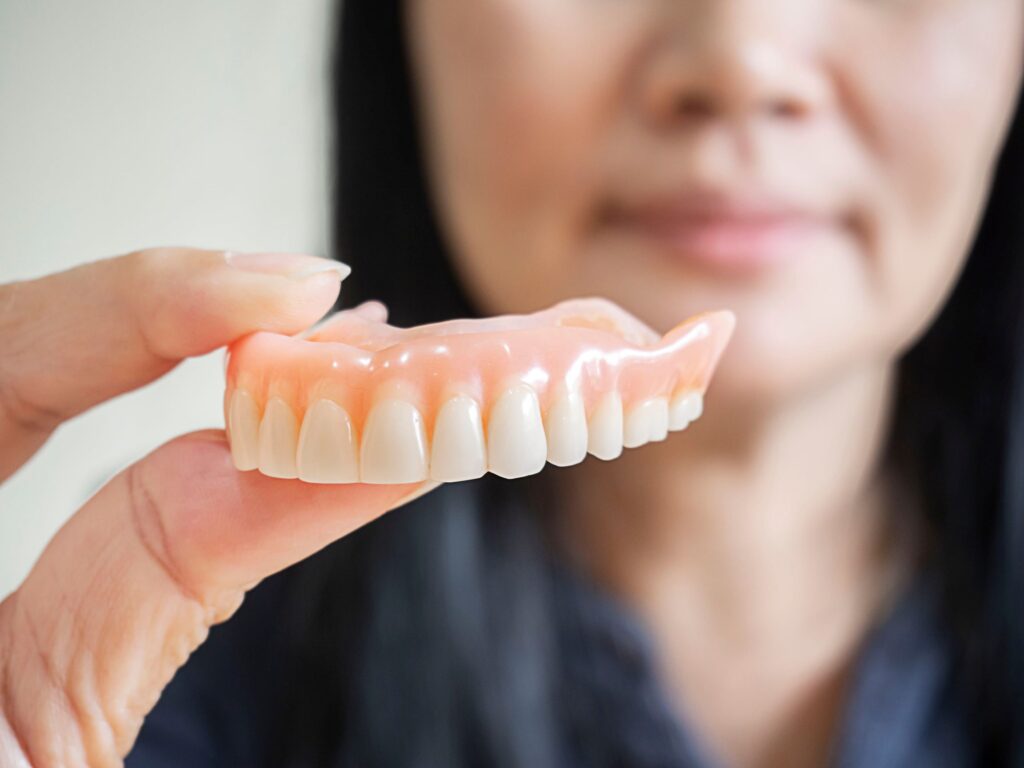
Dentures are the tried-and-true solution for tooth loss and have a long history of successfully rebuilding smiles. However, your jawbone starts to thin after teeth go missing, eventually causing your restoration, which was initially designed to fit like a glove, to become destabilized.
Fortunately, there are various types of denture glues that can help keep your replacement teeth more firmly in place. If you’re struggling to pick the right product, continue reading to learn about 3 of the options and who might benefit from them!
Type #1: Adhesive Cream
One of the most popular options is denture cream, because it forms a cushion layer between your tender gums and the acrylic base of your teeth to improve comfort, which can be ideal for those with increased sensitivity. Not only that, but one study in 2014 discovered that this option tends to have a higher adhesive strength than powders.
These glues typically come in tubes, making it easy to squeeze them onto the base of your dentures. They are also often more affordable than the alternatives, making them incredibly popular with patients. However, if you tend to produce excess saliva, the added moisture might break down the bonding and loosen its grip.
Type #2: Denture Powder
Adhesive powders are often easier to use than creams or strips because there’s less specificity involved in sprinkling the product over the base of your dentures. Once applied, simply shake off the excess and then place them in your mouth as usual. This forms a tight bond against your gum tissues, though it tends to work best on well-fitted restorations.
Although creams might form a stronger bond, this option continues to gain popularity among patients with certain mobility challenges or who struggle to add just the right amount of glue to their teeth.
Type #3: Applicable Strips
These thin, flexible strips are often considered the easiest to apply because they can be conveniently peeled and placed onto the foundation of your dentures. It’s also the cleanest option because there’s no leftover cream to wipe off or excess powder to shake away before putting your teeth into your mouth. This option may be the most effective for ill-fitting restorations, although wearing them in their current condition could contribute to a bite misalignment or other oral concerns.
If you’re unsure whether adhesives can help keep your prosthetics in place or whether it’s time to reline or replace them, you can learn more by contacting your dentist!
Meet the Author
Dr. Pevzner is passionate about helping improve patients’ lives by enhancing their dental health. He earned his Doctor of Dental Surgery from SUNY Buffalo Dental School, where he graduated Summa Cum Laude. Today, he’s committed to continuing education and offers a complete menu of services, including dentures, to meet all your needs under one roof. His caring approach is paired with advanced technology to deliver accurate, comfortable treatment results. You can request an appointment on the website or call (512) 451-4412.